
FREE 10-Day Detox To Start Healing Naturally
The Truth About Electrolyte Drinks: What Every Athlete Needs to Know
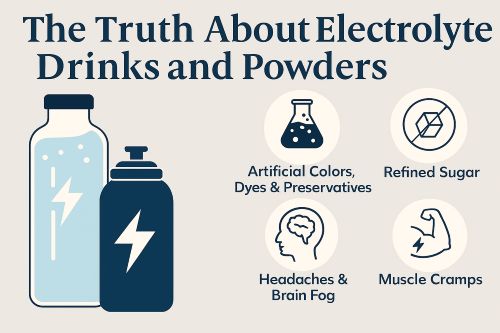
If you’re an athlete training hard at least three times a week, the information in this article is essential to know. We’re diving deep into electrolyte drinks, powders, and natural alternatives—what works, what doesn’t, and what might be quietly undermining your health.
Why Most Athletes Are Nutrient Deficient
After working with hundreds of athletes in my clinic, I can say with confidence—based on functional medicine testing and clinical symptoms—that nearly every athlete I’ve seen is deficient in key nutrients. Sometimes, these deficiencies are severe.
This includes not only vitamins and minerals, but also electrolytes, which are critical for hydration, muscle function, and nerve signaling.
The Rise (and Fall) of Commercial Electrolyte Products
Brands like Gatorade and PowerAde helped raise awareness about electrolyte needs in athletes. But, while their marketing was effective, their products are loaded with:
- Artificial dyes and colors
- Refined, genetically modified sugars
- Preservatives and synthetic additives
These drinks are not only nutritionally poor—they’re toxic. Today, we see a surge in powdered electrolyte packets marketed as “clean” or “natural.” But are they any better?
In most cases, no. Many of these products contain questionable ingredients that may do more harm than good.
Symptoms of Electrolyte Deficiency in Athletes
Even if you’re young and symptom-free, nutrient deficiencies develop over time. The more you train without replenishing key nutrients, the more likely you’ll face imbalances later in life. Imbalances that are created today in your teens or 20s, start showing up as health problems in your 50s, 60s, and beyond.
Some of the most major symptoms that athletes can experience when they are deficient in electrolytes are as follows:
- Muscle cramps: Sudden, painful contractions often triggered by low sodium, potassium, magnesium, or calcium.
- Fatigue or early muscle exhaustion: Muscles tire quickly, even with moderate effort.
- Dizziness or lightheadedness: Especially after standing up or during intense exertion.
- Headaches: Often dull and persistent, linked to sodium or magnesium loss.
- Brain fog or poor concentration: Electrolytes are essential for nerve signaling and cognitive clarity.
- Heart palpitations or irregular heartbeat: Low potassium or magnesium can disrupt cardiac rhythm.
- Nausea or GI upset: Electrolyte imbalance can impair digestion and gut motility, particularly with not enough chloride.
- Excessive thirst or dry mouth: A sign the body is trying to correct fluid imbalance.
- Tingling or numbness: Especially in fingers or around the mouth—often linked to calcium or magnesium deficiency.
- Heat intolerance or poor sweat response: The body struggles to regulate temperature without proper sodium balance.
- Mood swings or irritability: Electrolytes influence neurotransmitter function and adrenal stress response.
Do you struggle with any of these symptoms?
Recommended Daily Intake Ranges (Adults)
| Electrolyte | Minimum (mg) | Maximum (mg) |
|---|---|---|
| Sodium | 1,500 | 2,300 |
| Potassium | 2,500 | 3,400 |
| Magnesium | 310 | 420 |
| Calcium | 1,000 | 1,300 |
| Chloride | 1,800 | 2,300 |
| Phosphorus | 700 | 1,250 |
Athletes often require more than these baseline values due to sweat loss and metabolic demand.
Estimated Electrolyte Loss by Workout Intensity
| Workout Type | Sweat Rate | Sodium Loss | Potassium Loss | Magnesium Loss | Calcium Loss |
|---|---|---|---|---|---|
| Light (e.g. yoga) | ~0.5 L/hr | 200–500 mg/hr | ~100 mg/hr | ~20 mg/hr | ~15 mg/hr |
| Moderate (e.g. jogging) | ~1.0 L/hr | 500–1,000 mg/hr | ~200 mg/hr | ~30 mg/hr | ~20 mg/hr |
| Heavy (e.g. HIIT, heat) | ~1.5–2.0+ L/hr | 1,000–2,000+ mg/hr | ~300–400 mg/hr | ~40–60 mg/hr | ~30–40 mg/hr |
The American College of Sports Medicine (ACSM) recommends a sodium intake of 300 to 600 milligrams per hour for endurance athletes who exercise for over two hours or are considered “heavy sweaters,” losing more than 1.2 liters per hour.
One of the first things you have to do when you look at the list above, is to take a detailed look at your diet and see if you are getting these nutrients in the appropriate amounts per day. Start there. Most people are not, especially when it comes to potassium, magnesium, calcium, and phosphorus. Because the average American eats plenty of processed food, they are getting plenty of sodium and chloride (salt).
Additionally, one might also consider that these are recommended daily intakes for the average adult. For athletes, Even more than these nutrients may be required due to getting lots of exercise.
Electrolyte Functions in the Body
Let’s break down what each electrolyte does and why it matters—especially for athletes.
- Sodium: Regulates fluid balance, blood pressure, and nerve signaling. Essential for muscle contraction and hydration.
- Potassium: Maintains intracellular fluid balance, supports heart rhythm, nerve transmission, and muscle function.
- Magnesium: Powers over 600 enzymatic reactions, including energy production, muscle relaxation, and glucose regulation.
- Calcium: Builds bones and teeth, enables muscle contraction, nerve signaling, and blood clotting.
- Phosphorus: Supports bone structure, energy metabolism (ATP), and acid-base balance; key for DNA/RNA synthesis.
- Chloride: Maintains extracellular fluid balance, helps make stomach acid (HCl), and supports nerve and muscle function.
Why You Should Care—Even If You Feel Fine
You might be young and not have any of these symptoms—yet. But, nutritional deficiencies develop over time, and the more you work out without proper nutrient replenishment, the more likely these imbalances will show up later in life.
So it makes sense to give your body what it needs now, before problems arise.
I’ll never forget a pickleball tournament I played in down in Daytona Beach, Florida. It was the middle of summer, and out of the 12 teams signed up, three had to forfeit because their players were cramping so badly. That kind of cramping doesn’t happen overnight—it’s the result of long-standing electrolyte and nutrient deficiency.
Speaking of nutritional deficiencies and eating processed garbage food and its effect on athletes, in this podcast with Novak Djokovic (minute 43:20), he discusses how he couldn’t get to #1 until he gave up wheat and gluten products, dairy products including yogurt, and refined sugar. Once he gave those things up and improved his nutrition, he went to #1 against Nadal and Federer that next year. Nutrition plays a huge role in athletic performance. It’s so important to avoid processed foods.
Garbage Ingredients in Electrolyte Drinks and Powders
Let’s get into all the unwanted ingredients found in many electrolyte drinks and powders—and why it’s important to avoid them. Here’s a list of the top offenders:
Refined Sugar
Refined sugar often comes from genetically modified beets, is made with the herbicide glyphosate, and is completely devoid of nutrients. Nobody should ever be consuming refined sugar.
Artificial Dyes and Colors
These are mostly found in commercial electrolyte drinks and are linked to behavioral and neurological issues in sensitive individuals.
Citric Acid
Most commercial citric acid is made through microbial fermentation using a mold called Aspergillus niger—not from citrus fruits. Yes, you read that correctly: citric acid is made using a mold. The mold metabolizes sugars and produces citric acid as a byproduct. The sugar-rich substrate used is typically corn syrup or sugar beet juice—both genetically modified and treated with glyphosate. Even when companies claim to use non-GMO citric acid, they still use mold in the production process. Citric acid is added as a preservative and flavor enhancer, but it’s not something I recommend at all.
Stevia
Stevia is generally regarded as safe. However, when I muscle test people in the clinic, about 43% test weak for it. We’ve never consumed stevia in the quantities people use today, and it hasn’t been part of traditional or native diets. While stevia is widely used in electrolyte drinks as a zero-calorie sweetener, emerging research suggests it may not be ideal for everyone—especially with long-term use. Some studies indicate that stevia could alter the gut microbiome by affecting bacterial communication and diversity. Others raise concerns about its potential endocrine-disrupting effects in high doses. For individuals with gut sensitivities, adrenal fatigue, or those in detox protocols, these effects may be amplified. Stevia has also been shown to lower testosterone and shrink the testes.
Everyone these days is so afraid of sugar, even natural sugars from fruits, maple sugar or honey. I think sugar is one of the most amazing things for your health! I encourage my patients to have natural sugars.
Organic or Natural Flavors
A single “natural flavor” may contain hundreds of different chemicals—including solvents, preservatives, and emulsifiers—which don’t have to be disclosed to consumers or even manufacturers. Some natural flavor blends may contain glutamic acid or yeast extract, which act similarly to MSG in enhancing taste. MSG is neurotoxic and harmful to both brain and body. Even electrolyte powders labeled “organic” or “clean” may still use natural flavors with undisclosed additives.
Ester Gum
Derived from pine tree resin and chemically processed, ester gum helps emulsify oils in citrus-flavored drinks, keeping them suspended. It may raise concerns for patients with chemical sensitivities or liver detox issues.
Silicon Dioxide
A naturally occurring compound made of silicon and oxygen, found in sand, quartz, and plants. In supplements and powders, it’s used as an anti-caking agent to prevent clumping and improve flow. While silica exists in nature, the form used in supplements is often lab-made and may involve nanotechnology or ultra-fine particles. Though not proven harmful, some practitioners report that sensitive individuals—especially those with leaky gut, IBS, or mold illness—may react poorly to cumulative exposure.
Maltodextrin and Dextrose
Both are typically derived from genetically modified corn and are used as fillers or sweeteners in many commercial electrolyte products.
Acesulfame Potassium
A synthetic, zero-calorie sweetener often used to enhance sweetness (200x sweeter than sugar) and mask bitterness from minerals. It’s garbage and should be avoided.
Sucralose and Aspartame
Both are zero-calorie “sweet” enhancers that are neurotoxic and chemically engineered. These are science experiments—not food—and can have devastating health consequences.
Every company that has one or more of these particular ingredients in them, I would avoid completely. To my knowledge, not one long term safety study has been done to determine the toxicity of these ingredients. But, since our ancestors didn’t consume any of these, I would encourage you not to consume them either. The further that we get away from nature we usually start to have problems. Many athletes are consuming these in large amounts from all these powders and drinks and with all of the things that contribute to poor health these days, adding more things in that are supposed to be “good” for you but have these ingredients maybe compromising your health in the long run.
Popular brands and their ingredients
Now that we have established the ingredients that one should stay away from, let’s take a look at the ingredient list of popular products and also the amount of electrolytes that they have.
- Gatorade Thirst Quencher Powder. 150mg of sodium and 50mg of potassium. Other ingredients: Sugar, citric acid, dextrose, sodium citrate, monopotassium phosphate, calcium silicate, gum arabic modified food starch, natural flavor, blue one. This is just garbage, which no one should be consuming.
- Jigsaw electrolyte supreme. 270mg of sodium, 600mg of chloride, 30mg of calcium, 210mg of potassium. Other ingredients: other vitamins, Citric Acid (as bicarbonate reactor, for flavor), Natural Flavors (no MSG, for tartness), Malic Acid (for flavor), Stevia Leaf Extract (for sweetness), Red Beet Juice & Beta Carotene (for color), Carrot Concentrate & Hibiscus Concentrate (for color), Silicon Dioxide (reduces clumping), Monk Fruit Extract (for sweetness).
- Nuun Zero Sugar. sodium 200 mg; potassium 125 mg; magnesium 20 mg; calcium 30 mg; chloride 75 mg. Citric acid, tapioca syrup solids, sodium bicarbonate, potassium bicarbonate, sea salt, Less than 2% of calcium bicarbonate, Magnesium oxide, stevia leaf extract, Sodium carbonate, olive oil, beet juice for color.
- Halo. 80 mg of sodium: 200mg of potassium, 100mg of magnesium, 60mg of calcium. Other ingredients: Vitamin C (ascorbic acid); organic cane sugar; potassium citrate; citric acid; calcium lactate; sodium bicarbonate; magnesium oxide; organic natural flavors; “72 ionic trace minerals”; acacia gum (gum arabic); malic acid; stevia extract (steviol glycosides and rebaudioside A); silica, other vitamins.
- LMNT: 1,000 mg sodium, 200 mg potassium, 60 mg magnesium. Other ingredients: Salt (Sodium Chloride), Citric Acid, Magnesium Malate, Potassium Chloride, Natural Flavor, Stevia.
- Pedialyte AdvancedCare Plus Electrolyte Powder. 650mg of sodium, . 870mg of chloride, 370mg of potassium. Other ingredients: Anhydrous Dextrose, Short-chain Fructooligosaccharides, Citric Acid, Salt, Potassium Citrate, Sodium Citrate, Natural & Artificial Flavor. Less than 2% of: Calcium Silicate, Acesulfame Potassium, Sucralose, and Blue 1. “#1 doctor recommended” – But, it is a particular kind of GARBAGE. How any doctor could recommend this to anyone is ridiculous.
- Liquid I.V.® Hydration Multiplier. 500mg of sodium, 370mg of potassium. Other ingredients: Cane Sugar, Dextrose, Citric Acid, Salt, Potassium Citrate, Sodium Citrate, Dipotassium Phosphate, Stevia Leaf Extract (Rebaudioside A), Silicon Dioxide, Vitamin C (Ascorbic Acid), Natural Flavors, Vitamin B3 (Niacinamide), Vitamin B5 (Calcium D-Pantothenate), Vitamin B6 (Pyridoxine Hydrochloride), Vitamin B12 (Cyanocobalamin). Garbage.
- Micro Ingredients Electrolyte Powder. 10mg of sodium, 15mg of chloride, 1000mg of potassium, 100mg of magnesium and 82mg of calcium. Other ingredients: Citric Acid, Magnesium Citrate, Potassium Citrate, Calcium Lactate, Salt (Sodium Chloride), Stevia Leaf Extract, Natural Lemon Juice powder, Natural Coconut Water powder, Natural Lemon and Raspberry flavor.
I could list many other brands, but as you can see, most of them contain citric acid, stevia, natural flavors, and other ingredients that are not things that I would personally want to consume every time I workout. As you keep reading, you will discover other alternatives to these products above that I feel are much better for you, have more electrolytes and will contribute positively to your health in the long run.
Sodium
Here is where you really have to pay attention. If you are eating a lot of processed food, which is not recommended for any athlete, you are most likely getting plenty of salt. So it must be said that if you are eating the Standard American Diet, you may getting enough sodium. If, however, like me, you avoid processed food, then you need to make sure you are getting salt from other clean sources (fruits, veggies, sea vegetables, Himalayan salt or sea salt).
Table salt is usually composed of three ingredients – sodium, chloride, and iodine. Although, some formulations just have sodium and chloride. I would not advocate for regular table salt. However, I would advocate for Himalayan salt or sea salt. With that being said, there have been some independent studies that have shown that with sea salt some brands can contain microplastics found in the ocean and also heavy metals and chemicals. Heavy metals and chemicals can also be found in Himalayan salt.
The site mamavation conducted a test 23 different brands that included Himalayan and also sea salts. each brand was tested for metals aluminum, arsenic, cadmium, mercury, and lead & microplastics. Selina Celtic Sea Salt was one of the best tested. I will recommend how to consume this below.
If you do buy an electrolyte powder that has Himalayan salt or Celtic sea salt, it may be filled with some toxic metals.
What is strange to me is that some electrolyte powders only have a very minimum amount of sodium in them, such as 50 or 100mg. If you are losing 1000mg per hour, it seems logical that you should have a decent amount of salt that covers more than 100mg. But, as I mentioned, with most people eating so much processed food, this may be the reason there is not so much sodium found in some electrolyte powders.
Based upon the material discussed above, It is hard for me to recommend many of the electrolyte drinks or powders, as they all contain ingredients that I do not find to be acceptable for long term use. So, I want to offer some different alternatives that are different then what most people on the market are consuming today. In addition to these alternatives being better, they also will massively enhance your health.
The Best Electrolyte Drink on the Planet – Celery Juice!
Celery Juice. I have been making 16 to 20 ounces of celery juice every single morning first thing on an empty stomach for the better part of 10 years. Not once have I ever cramped in any athletic competition. 16 oz of celery juice provides key electrolytes:
- Potassium: 1,340 mg
- Sodium: 300–450 mg
- Calcium: 190 mg
- Phosphorus: 170 mg
- Chloride: 450 mg
- Magnesium: 30 mg
If you compare the amount of nutrients and electrolytes that you get in celery juice versus the electrolyte drinks or powders, you will see that celery juice trumps them all.
It also has vitamins A, C, and K, antioxidants like flavonoids, and hydrating phytonutrients. It’s low in sugar, alkalizing, and supports cellular energy, digestion, and blood pressure regulation. I would dare say that there is no better electrolyte drink than celery juice on the planet. I am also convinced that every athlete on the planet should be consuming celery juice every day. There are innumerable other benefits for consuming this for health as well. You can find an amazing juicer here and make sure to use organic celery and make the juice and consume it immediately (don’t juice and store in the fridge).
Carrot Juice. This is another fantastic juice to have that is loaded full of nutrients. 16 oz of carrot juice provides:
- Potassium: 1,378 mg
- Sodium: 130 mg
- Calcium: 100 mg
- Phosphorus: 200 mg
- Chloride: 150 mg
- Magnesium: 10–20 mg
- Iron: 2 mg
- Beta Carotene: 4,500 mcg
- Vitamin C: 40 mg and many other trace phytonutrients.
I have been juicing 16 ounces of celery and 16 ounces of carrot or carrot/apple juice per day for over a year now and getting these extra nutrients has been incredible for my health.
Great Alternative Products for Travel or Convenience
If you’re traveling or need something quick and portable, here are a few electrolyte powders I’ve vetted. While I still prefer juicing, these are better options than most of what’s on the market:
Good Intentions Club Unflavored Electrolytes
- 250 mg sodium
- 100 mg potassium
- 30 mg magnesium
- 467 mg chloride This product uses regular salt but contains the basic electrolytes you need. It’s cost-effective—200 servings for around $30 ($0.20 per serving). This is what I would take with me if I travel.
Fast Lyte No Sugar Electrolytes
- 294 mg potassium
- 144 mg sodium
- 25 mg magnesium
- 6 mg calcium Includes trace minerals from pink Himalayan salt and red algae. It does contain citric acid, but it’s GMO-free. Overall, pretty decent—minus the citric acid.
SALTT Hydrate Electrolyte Drops
- 265 mg potassium
- 255 mg sodium
- 90 mg magnesium Sourced from the Great Lakes, this product also contains a variety of trace minerals. No other added ingredients.
- 850 mg sodium
- 425 mg potassium
- 125 mg magnesium
- 50 mg calcium Also includes a bit of vitamin C, methylated B-12, and B-6. No other added ingredients. It’s a little more expensive but offers higher electrolyte content than most.
Paleo Valley Essential Electrolytes
I like this one—if the fruit “flavors” are truly fruit-derived and not chemically manufactured. It’s more expensive than the others, but the ingredients appear to be top-notch.
- 400mg of sodium
- 280mg of potassium
- 160mg of magnesium
- 80mg of calcium
- Organic fruit flavors, monk fruit, organic coconut water powder
If you’re an athlete on the road and want something quick and convenient, these products can be helpful when juicing isn’t an option or in addition to juicing.
My electrolyte drink during workouts
Here is what I do when I bring water with me while I am working out. My workout bottles either are 20 or 32 ounces of water. With either size I add the following things:
- Celtic sea salt. 1/4 of a teaspoon is 458mg of sodium and 930 mg of chloride. Plus you get lots of other trace minerals. You could do 1/8 of a teaspoon if this was too salty for you.
- 1 squeezed lemon. The juice of one squeezed lemon offers about 100-140mg of potassium, 5mg of calcium, 3mg magnesium, and 3mg of phosphorus. The lemon does not have to be organic.
- 1/2 – 1 tablespoon organic maple syrup. 15mg of calcium. Together with the squeezed lemon, this makes it taste just like lemonade. This is a wonderful source of sugar and also contains other trace nutrients. If you don’t want the sugar, you don’t have to add this.
- Take anywhere between 2-6 capsules of this calcium/magnesium supplement per day to round out the electrolytes you need. If you just wanted to take extra magnesium, try this magnesium glycinate (2-6 per day). For better sleep take 2-4 capsules about 1 hour before sleep.
Cramps and Electrolytes in Chinese Medicine
In traditional Chinese medicine, muscle cramps are often seen as a result of imbalances in Qi, Blood, and the Liver and Kidney systems. Rather than focusing solely on electrolyte loss or dehydration, TCM interprets cramps as signs of internal disharmony—especially involving circulation and nourishment of the muscles and tendons.
-
Liver Blood Deficiency: The Liver governs tendons and stores Blood. When Liver Blood is insufficient, the tendons and muscles are undernourished, leading to spasms, twitching, or nighttime leg cramps.
-
Kidney Yin Deficiency: The Kidneys nourish the marrow and support the Liver. Deficiency here can cause chronic tightness, weakness, or cramping, especially in the lower limbs.
-
Qi and Blood Stagnation: Poor circulation of Qi and Blood can cause localized pain and cramping, often worse with cold or inactivity.
We use food therapy, herbal therapy and acupuncture to strengthen these deficiencies and move the qi and blood. This will help to reduce cramping in the long run and restore the function of the liver.
One other major factor that influences athletic performance, and also the extent to which someone may cramp up, is the overall level of toxicity in the liver and the rest of the body. Your body has to utilize resources and nutrients in order to deal with toxins, and if you already have deficiencies, the load of toxins in the body only makes the nutritional deficiencies even worse. So, it is critical to detoxify using very specific substances every day. This is something that I do with almost everyone in the clinic that comes to see me.
Final Thoughts
Electrolyte imbalance can be one of the most overlooked issues in athletic performance and recovery. Most commercial products are filled with ingredients that don’t belong in the human body—let alone in something marketed as “healthy.”
If you’re serious about your health and performance, start by:
- Avoiding toxic additives
- Replenishing electrolytes based on your workout intensity
- Using real food sources like celery and carrot juice
- Choosing clean powders when needed
- Listening to your body and tracking symptoms
If you wanna optimize your athletic performance, feel free to set up an appointment. We can optimize your diet, supplements, pulling toxins from your system, and speeding up recovery through acupuncture. Schedule a free 15 minute discovery call today!

FREE 10-Day Detox To Start Healing Naturally
FREE 10-Day Detox To Boost your Energy, Sleep Better, And Decrease Pain & Inflammation – All Naturally!
Contact Form

Online Course Reveals...
How To Heal Digestive Pain And Discomfort, Lose Stubborn Body Fat, And Boost Your Energy